Monday, August 30, 2010

Cells, Tissues, Organs, Systems

 
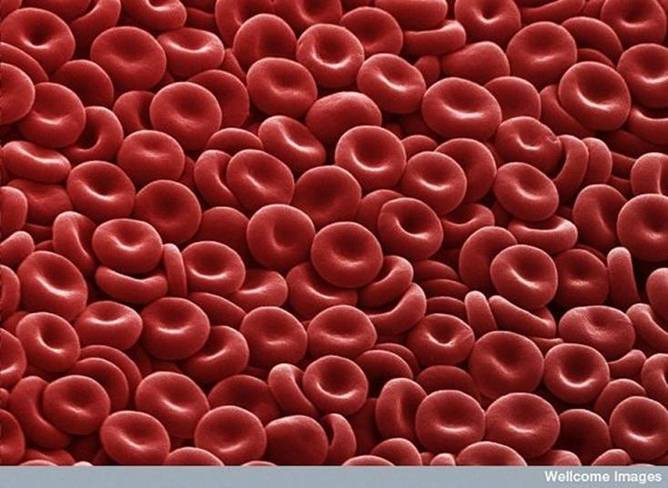
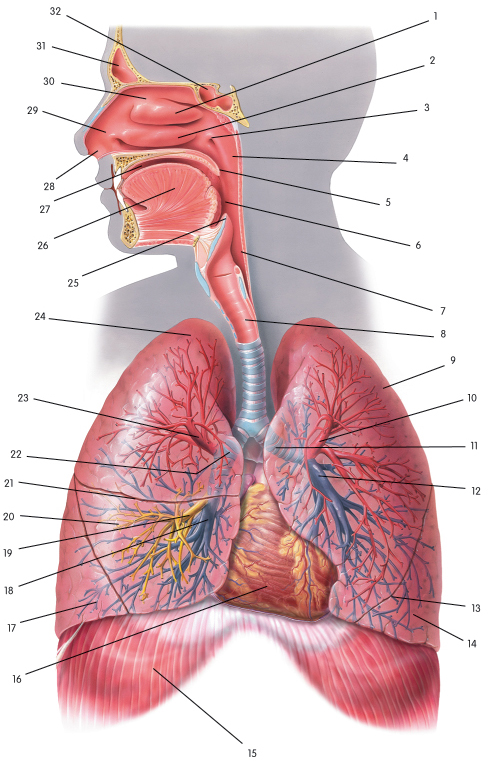
Cells, tissues, organs and systems are all important parts of our human body. Cells are all over our body and usually cannot be seen with the naked eye. These cells may vary in type (nerve cell, cheek cell, hair root cell, etc.) Many cells group together to form muscle tissues in our body. These tissues are rich in protein. Examples of tissues in our body are (muscle tissues, and even blood). There are three different major types muscle tissue. The cardiac muscle, skeletal muscle, and visceral muscle. The cardiac muscle is found in the heart, the skeletal muscle in the bones, and the visceral muscle in the arteries, bladder, digestive tract, as well as other organs. The tissues in our body cluster together to form organs, such as the heart, brain, stomach, etc. As mentioned above, the visceral muscle makes up many of the organs in our body. A few organs make up a system, which is required by our body to live. Examples and uses of systems are the digestive system, which breaks down food into simpler substances, the respiratory system, in which oxygen is taken in and digested food is used up as energy, the circulatory system, in which blood is pumped all over the body to transfer oxygen to the various parts of our body, etc. Each and every organ and system plays an important part in our daily lives, and without them, our body cannot survive.

Sunday, August 29, 2010

Reverse Osmosis- what it is about

Reverse osmosis is a method of filtration which can remove different types of molecules of different sizes by applying pressure to the solution when it is on one side of a selective membrane. The solute will be retained on the pressurized side of the membrane and the pure solvent will be allowed to pass to the other side. For this process to be carried out, the membrane should not allow large molecules or ions through the pores, but should allow small components of the solution to pass through freely. In other words, the membrane is semi-permeable, thus allowing small substances to pass through while preventing bigger particles from entering.
A common use of reverse osmosis is its use for water purification purposes. Seawater has to be cleared of the salt and other impurities in order to be consumed, so reverse osmosis has to take place to clear out all the impurities and purify the water. The salt particles, along with other dirt particles in the sea water cannot pass through the membrane, however the water particles can, so the salt and dirt particles will gradually be removed from the mixture.
This process is the opposite of osmosis, in which the solvent moves from an area of low solute concentration, through a membrane, to an area of high solute concentration.
The process of reverse osmosis is somewhat similar to membrane filtration. However, membrane filtration includes the use of straining, or size exclusion, so the process can achieve perfect exclusion of particles regardless of the pressure and concentration. On the other hand, reverse osmosis involves a diffusive mechanism so that the separation efficiency depends on the solute concentration, pressure and water flux rate.

Tuesday, August 24, 2010

Rockets- how they fly in space

I have always wondered how rockets could fly in space, as we all know oxygen is needed for combustion, but there is no oxygen is space. So I researched about this topic, and came up with some interesting results.
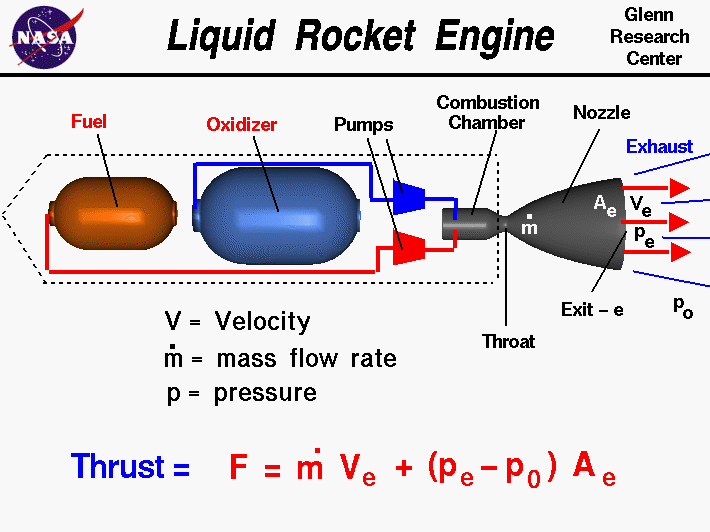
I found out that in a rocket's engine, a fuel propellant is burned with an oxidizer propellant to produce large volumes of very hot gas. The hot gas that is ejected from the rocket engine acts as a propellant, and produces thrusts for the rocket, to make it move. The hot gases that are ejected from the engine expand accelerates them until they rush out of the back of the rocket at extremely high speeds, propelling the rocket forwards. During takeoff, however, the rocket makes use of its liquid hydrogen and oxygen tanks to boost themselves out of the Earth's gravitational field.

Wednesday, August 4, 2010

Iodine- What it can do

Iodine is commonly used in Science Laboratories for various experiments, as it has a good use. It comes in many forms, small crystals, liquid, or even the raw form (chunk of crystal). Iodine can detect if there is starch in a substance when it is applied onto it. It reacts with starch and turns blue-black when put together with starch. If the iodine solution turns dark blue, it represents that starch is detected in the substance. If if does not change its colour and remains brown, it means that starch is not present. Take for example a biscuit, as shown in the picture above. When iodine is applied on it, the solutions turns dark blue at once, meaning that starch is present in the biscuit. However, if iodine is applied onto a piece of fish meat, the colour of the iodine solution will not change and will remain brown, as starch is not present in fish meat. Starch is only present in plant products (flour, potatoes, bread, etc.), and is not present in meat or other products (chicken, plastic, metal, etc.), which means that iodine will
only react and turn blue-black when it comes into contact
with plant products.

Sunday, August 1, 2010

Cells- What I learnt

 Today, I have learnt a lot of information about cells, both animal and plant. Firstly, I have learnt that animal cells differ from plant cells greatly, as they lack the presence of a few cell parts. A plant cell has the basic cell parts of - the sap vacuole, the cell wall, the nucleus, the cytoplasm, the cell membrane and the chloroplasts, while an animal cell has the basic cell parts of - many small vacuoles, the nucleus, the cytoplasm and the cell membrane. Other than these parts, plant and animal cells also contain other parts which are more complicated, such as the smooth and rough endoplasmic reticulum, the ribosomes, mitochondria, golgi body, etc. Below is an explanation of the various cell parts as mentioned above-
Sap Vacuole/Small Vacuoles- Stores water, nutrients, and other substances that are not immediately used. It takes up most of the space in a typical plant cell, however, it is small and there is the presence of a few of it in typical animal cells. It stores compounds and helps in plant and animal growth.
Cell Wall (Plant Cell)- Made up of cellulose, and it provides structural support for plant cells. It helps to maintain the cell's rigid shape and it also controls the maximum amount of water that is taken into the cell.
Nucleus- It contains chromosomes, structures made up of genetic information,and is essential for cell division. It regulates other cell activity.
Cytoplasm- It distributes food and oxygen to other parts of the cell, and it fills up and supports the remaining empty spaces left in the cell. It contains mostly dissolved nutrients.
Cell Membrane- It is a semi-permeable layer around the cell which allows waste materials to exit the cell, and allows only certain substances to enter the cell.
Chloroplasts (Plant Cell)- They are found in numbers in plant cells, and store chlorophyll, which is needed for photosynthesis. They are the food producers for the cell.

These are the various basic parts and their functions of plant and animal cells, and they each have their own significance. In cells, 'division of labour' means that each part of the cell has its own specific function, and this will make them specialize in their task and thus, efficiency is increased.