This year, I have taken part in many science experiments in the science laboratory, and I would like to share some of my personal experiences in these activities that I have taken part in.
Laboratory sessions and experiments I have taken part in
Throughout the year, I have taken part in various science experiments which took place in the science laboratory. An examples of these sort of activity in Term 1 was getting to know more about the Bunsen burner, and knowing how to operate it. Further activities in Term 2 and 3 required the use of the Bunsen burner, such as separating salt from a mixture of salt and sand, boiling of water, etc. Also, there were other activities such as measuring the heat intensity of two different containers with different colours, etc. Also, there were many different sort of activities according to the practical worksheets we were given. I feel that the idea of having practical worksheets to do while we did the experiments was a good idea, as it was partially to make sure that we learnt from the experiment, well as to make sure that we understood the topic of the experiment (elements, compounds, mixtures, cells, distillation, etc.)
The greatest takeaways from these activities was that they were a fun way to learn our science topics and I feel that this should be the same for next year as well.
Saturday, September 25, 2010

Reflections on Termly Personal Performance and Growth Development in Science
This is a reflection on my termly science grades and growth in understanding of science, and how I can improve your grades and keep growing in scientific understanding and interest.
Term 1
For my science test in Term 1, I scored 31/40, which was rounded off to 78/100. This score was an A1, and I feel that my score was quite decent, although I could have done better.
Term 2
For my science test in Term 2, I scored 21.5/40, which was rounded off to 54/100. This score was an C6, and I was not satisfied with my score. I felt that I had not put in my maximum effort and I decided to immediately put a stop to computer gaming, which was disturbing me from my work.
Term 3
For my science test in Term 3, I scored 33.5/40, which was rounded off to 84/100. This score was an A1, and I was happy with my score and felt that putting a stop to gaming had indeed paid off. I told myself to work harder in future, as I knew that I can do well if I try my very best
Term 4
Right now, I have yet to take the science main examination paper in Term 4, and I hope that I can do well and pass with flying colours. My aim is not just to get an A1, but to do the very best I can, and with the maximum effort I put in, I believe that I can achieve what I want and get a good grade.
I feel that getting A1 or the best in class is not the only things that are important, but what is just as important is putting in as much effort as I can and being happy that I have done so.
Also, I feel that understanding the science topics is another important factor. If I do not understand a certain topic, I may not be able to do well in the test however hard I study for it, so I feel that I should ask any topics that I am unsure of.
Also, I feel that understanding the science topics is another important factor. If I do not understand a certain topic, I may not be able to do well in the test however hard I study for it, so I feel that I should ask any topics that I am unsure of.
Friday, September 24, 2010
Issues in teaching and learning science
This is a post about my thoughts and reflections on the topics and issues that I have learnt in the lower secondary science curriculum.
SI Units
Firstly, I have understood the importance of the SI units. The SI base units refer to the International System of Units and is made up of the following base units and their physical quantities,-
metres for length,
kilograms for mass,
seconds for time
amperes for electric currents,
kelvin for temperature,
candela for luminous intensity, and
mole for the amount of a certain substance.
The main importance of SI units is standardization. The idea is to use the same standard units all over the world. SI units form a coherent set, and they are the only form of units that are globally recognized. They have a clear advantage for establishing a worldwide dialogue, and therefore simplify the teaching of science and technology if everyone uses this system.
I feel that SI units are of significant importance to the study of Science, and I have understood their importance to our daily life.
Difference between weight and density
SI Units
Firstly, I have understood the importance of the SI units. The SI base units refer to the International System of Units and is made up of the following base units and their physical quantities,-
metres for length,
kilograms for mass,
seconds for time
amperes for electric currents,
kelvin for temperature,
candela for luminous intensity, and
mole for the amount of a certain substance.
The main importance of SI units is standardization. The idea is to use the same standard units all over the world. SI units form a coherent set, and they are the only form of units that are globally recognized. They have a clear advantage for establishing a worldwide dialogue, and therefore simplify the teaching of science and technology if everyone uses this system.
I feel that SI units are of significant importance to the study of Science, and I have understood their importance to our daily life.
Difference between weight and density
Monday, September 6, 2010
About leaves- starch, cells, and more
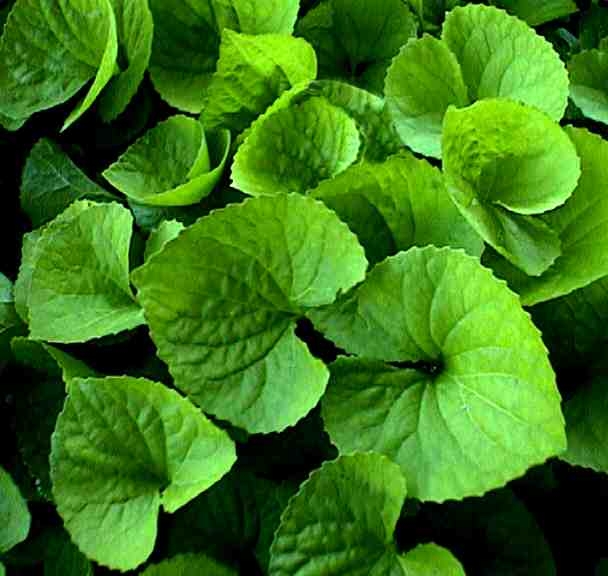


Leaves is an interesting topic. They are in different shapes and sizes, and they contain chlorophyll. Even though they are all different in many ways, they have many areas in common.
Starch
All leaves contain starch, unless it is used up. The starch is only present in specific parts of the leaf as shown in the picture above. Leaves have to be boiled in alcohol in order to remove the chlorophyll and make it easier to see the starch turn dark blue when iodine is applied onto it. The leaf has to be put into alcohol and boiled in a boiling tube, but it must not be placed directly under the flame, as alcohol is flammable (picture above). Once the leaf is boiled in alcohol, the chlorophyll will be removed in the solution and the leaf will become white and colourless. It can now be used for iodine testing, as the results can be seen more clearly.
Cells
All leaves are made up of many cells, and they contain chloroplasts, which hold chlorophyll, giving leaves its green and bright colour. Although there are some leaves which are not exactly green in colour, they still contain chlorophyll, as they have a pigment which makes them look the colour they are, red, maple leaf for example. All leaves also have stomata at the underside and top side, as shown in the picture above. They are pores which allow gaseous exchange between the plant and the surrounding air. Stomata consist of guard cells, which regulate the size and opening of the stoma, just like a muscle. The stomata exchange oxygen and carbon dioxide with the surrounding air during respiration and photosynthesis.
Veins
The veins on leaves have an important use. They are the vascular tissue of the leaf and are located in the spongy layer of the mesophyll. they are made up of the xylem and phloem. The xylem is made up of tubes that brings water and minerals from the roots into the leaf. As for the phloem, they are tubes that move sap, with dissolved sucrose out of the leaf.
Wednesday, September 1, 2010
Cockroach- key to future antibiotics

After going through tests, scientists have discovered that the tissue from the brains and nervous system of the cockroaches had killed more than 90% of the tested bacteria without damaging any human cells. The scientists were not surprised that the insects could naturally secrete their own antimicrobial drugs.
As cockroaches live in unsanitary and harsh environments, they often encounter many different types of bacteria. It would therefore be logical that they developed themselves against micro-organisms.
This topic interests me, as the thought of how an insect as dirty as the cockroach could be used in antibiotics to treat humans is shocking, yet the results of doing that would be very effective.
Monday, August 30, 2010
Cells, Tissues, Organs, Systems
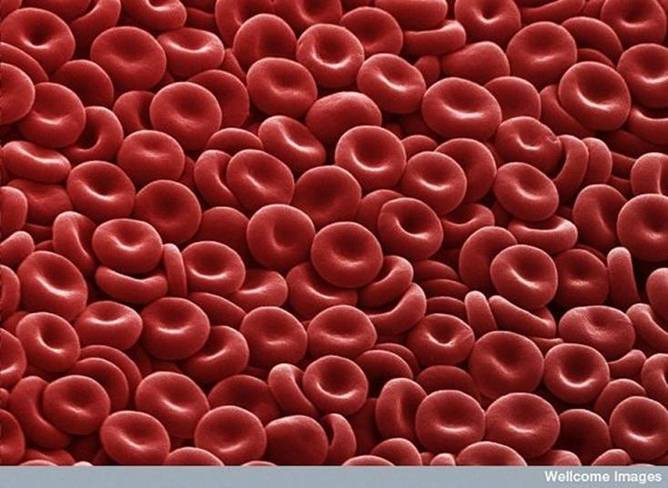


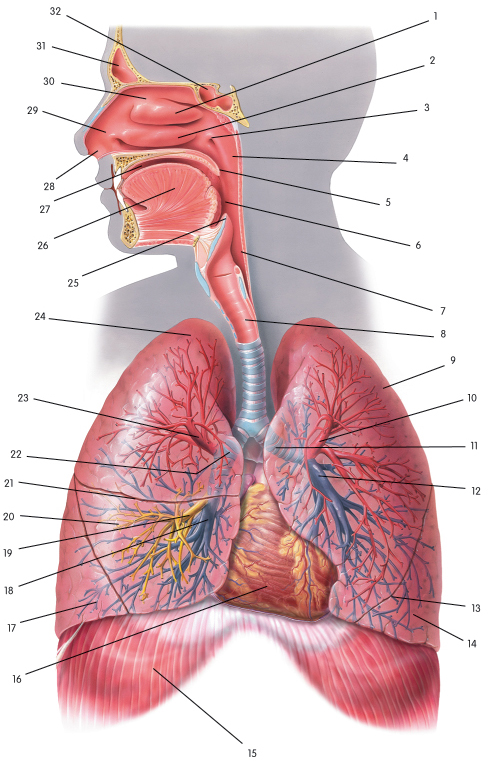
Cells, tissues, organs and systems are all important parts of our human body. Cells are all over our body and usually cannot be seen with the naked eye. These cells may vary in type (nerve cell, cheek cell, hair root cell, etc.) Many cells group together to form muscle tissues in our body. These tissues are rich in protein. Examples of tissues in our body are (muscle tissues, and even blood). There are three different major types muscle tissue. The cardiac muscle, skeletal muscle, and visceral muscle. The cardiac muscle is found in the heart, the skeletal muscle in the bones, and the visceral muscle in the arteries, bladder, digestive tract, as well as other organs. The tissues in our body cluster together to form organs, such as the heart, brain, stomach, etc. As mentioned above, the visceral muscle makes up many of the organs in our body. A few organs make up a system, which is required by our body to live. Examples and uses of systems are the digestive system, which breaks down food into simpler substances, the respiratory system, in which oxygen is taken in and digested food is used up as energy, the circulatory system, in which blood is pumped all over the body to transfer oxygen to the various parts of our body, etc. Each and every organ and system plays an important part in our daily lives, and without them, our body cannot survive.
Sunday, August 29, 2010
Reverse Osmosis- what it is about

A common use of reverse osmosis is its use for water purification purposes. Seawater has to be cleared of the salt and other impurities in order to be consumed, so reverse osmosis has to take place to clear out all the impurities and purify the water. The salt particles, along with other dirt particles in the sea water cannot pass through the membrane, however the water particles can, so the salt and dirt particles will gradually be removed from the mixture.
This process is the opposite of osmosis, in which the solvent moves from an area of low solute concentration, through a membrane, to an area of high solute concentration.
The process of reverse osmosis is somewhat similar to membrane filtration. However, membrane filtration includes the use of straining, or size exclusion, so the process can achieve perfect exclusion of particles regardless of the pressure and concentration. On the other hand, reverse osmosis involves a diffusive mechanism so that the separation efficiency depends on the solute concentration, pressure and water flux rate.
Subscribe to:
Posts (Atom)